
November 2, 2026
Valve Expansion Joints: Trends Reshaping Valve-Pipe Connections
Valve expansion joints are changing how engineers handle vibration and thermal movement at valve flanges. This trend analysis explains the design, compares it with alternatives, and gives buyers a decision framework.
Why Valve Connections Are a Growing Weak Point in Piping Systems
Valves concentrate stress. They are rigid, heavy, and often bolted to pipework that moves with temperature, pressure pulses, or pump vibration. The flange joint between a valve and its adjacent pipe is where that movement becomes a fatigue problem. Historically, engineers solved this with expansion loops, rubber bellows, or flexible couplings. A newer option—the valve expansion joint—combines a flange-to-valve connection on one side with a clamp-to-pipe connection on the other, adding anti-vibration and thermal compensation in a single fitting.
This article examines the technical and sourcing trends behind that design, separates evidence from inference, and gives buyers a practical framework for evaluating whether a valve expansion joint belongs in their specification.
What a Valve Expansion Joint Does—and Where It Fits
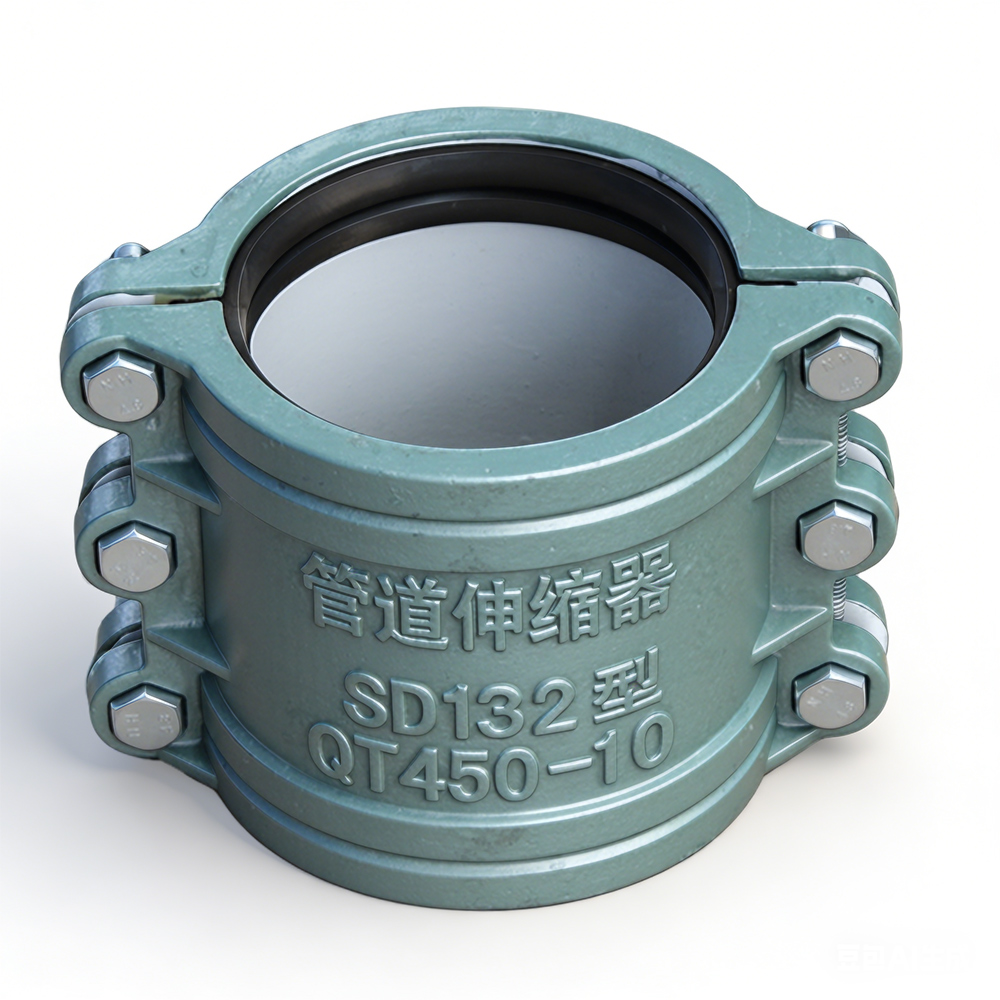
A valve expansion joint is a pipe repair and connection fitting used at the junction between a pipe and a valve. According to the supplied product description, one side has a flange that aligns and bolts to the valve flange; the other side has a clamp that grips the adjacent pipe. The design provides anti-vibration protection and compensates for thermal expansion at critical valve junctions. Typical applications listed are pipe-to-valve connections, pump stations, and temperature-variable pipeline systems.
That combination matters because it addresses two failure modes at once. Vibration from pumps or compressors can loosen flange bolts or crack welds. Thermal cycling—common in heating, process, and district energy systems—causes axial movement that rigid connections cannot absorb. A fitting that clamps rather than welds also reduces installation time and avoids hot work near valves.
How it differs from a standard expansion joint
Conventional expansion joints (bellows, slip-type, or rubber) are installed in straight pipe runs. They require pipe cutting, flanging, or welding. The valve expansion joint is different: it is designed to attach directly to an existing valve flange and clamp onto the pipe without cutting or draining the line, based on the product description. That makes it a retrofit-friendly option for maintenance and upgrade projects where shutdown time is costly.
Three Trends Driving Adoption
1. Maintenance windows are shrinking
Plant operators face pressure to reduce downtime. Any fitting that installs without cutting pipe or stopping flow has an operational advantage. The supplied description of the related pipe expansion joint states that it requires no pipe cutting and no flow stoppage—clean the pipe surface and clamp on. The valve expansion joint follows a similar clamp-on logic on the pipe side, though the valve side still requires bolting to the flange. Buyers should verify whether their line can be isolated at the valve before installation; the product description does not claim the valve side is installed under live conditions.
2. Vibration-induced failures are getting more attention
As pumps and rotating equipment run at higher speeds or with variable frequency drives, vibration transmission into piping becomes more visible. A valve expansion joint introduces a flexible element between the valve and pipe, which can damp vibration. The supplied features list anti-vibration protection as a benefit. However, no quantitative vibration-damping data (e.g., insertion loss or frequency range) is provided. Buyers with severe vibration should request test data or consider a dedicated vibration isolator in addition to the joint.
3. Thermal movement in temperature-variable systems
District heating, solar hot water, and process lines with wide temperature swings experience axial expansion and contraction. Rigid valve connections can crack or leak over time. The valve expansion joint is described as compensating for thermal expansion. The amount of compensation is not specified in the supplied evidence. Buyers should ask for the axial movement range and confirm it matches the calculated thermal growth of their pipe segment.
Comparing Valve Expansion Joints with Alternative Solutions
The table below compares the valve expansion joint with three common alternatives on dimensions that matter to buyers. Ratings and movement capacities are not provided in the supplied evidence; the comparison is qualitative.
| Solution | Installation | Vibration damping | Thermal movement | Best fit |
|---|---|---|---|---|
| Valve expansion joint (flange + clamp) | Bolt to valve flange; clamp to pipe; no pipe cutting on clamp side | Yes, per supplied features | Yes, per supplied features; range unspecified | Retrofit at valve junctions, pump stations |
| Rubber bellows expansion joint | Requires flanges or welding; pipe cut needed | Yes | Yes; movement range specified by manufacturer | New build or planned maintenance with isolation |
| Flexible coupling (clamp-on) | Clamp to pipe both sides; no cutting | Limited | Limited; primarily misalignment | Straight pipe repairs, minor movement |
| Expansion loop (pipe geometry) | Welded; requires space and pipe cutting | No | Yes; large movement capacity | New build with available space |
The valve expansion joint occupies a specific niche: it is the only option in this table that connects directly to a valve flange while clamping to the pipe without cutting. That makes it attractive for maintenance projects where the valve stays in place and the adjacent pipe cannot be easily cut or drained.
Decision Framework for Buyers
Use the following questions to evaluate whether a valve expansion joint is appropriate for a given project. Each question targets a gap in the supplied evidence or a common specification error.
- What is the axial movement requirement? Calculate thermal growth from the pipe material, length, and temperature differential. Then confirm the joint's rated compensation exceeds that value. The supplied description does not state a movement range, so request it from the supplier.
- What are the pressure and temperature ratings? The product description does not include pressure or temperature limits. These are essential for safety and code compliance. Do not assume ratings based on pipe size alone.
- Is the valve flange compatible? Flange standards (e.g., ASME, EN, JIS) and facing types vary. The joint must match the valve flange pattern, bolt count, and gasket surface. Verify before ordering.
- What is the pipe material and surface condition? The clamp side relies on a clean, smooth pipe surface for a seal. The related pipe expansion joint description specifies cleaning debris from the pipe surface before clamping. For corroded or pitted pipe, a sleeve repair clamp may be needed instead.
- Will the joint be exposed to vibration beyond its design? If the valve is near a reciprocating pump or compressor, request vibration data or consider additional isolation.
- What about access and future maintenance? The clamp side allows removal without cutting, but the flange side still requires unbolting. Plan for isolation valves upstream and downstream.
Where Valve Expansion Joints Fit in a Repair Strategy
Valve expansion joints are not a universal replacement for all expansion joints. They are best suited to specific scenarios: pump stations where vibration is a concern, temperature-variable systems where thermal movement occurs at valve connections, and retrofit projects where cutting pipe or shutting down flow is impractical.
For straight pipe repairs without a valve, a pipe expansion joint or sleeve repair clamp may be more appropriate. The sleeve repair clamp is designed for pipes with protruding obstructions such as flange discs, according to its supplied description. A reducer repair clamp serves transitions between different pipe diameters. Buyers should match the fitting to the actual geometry and movement profile rather than defaulting to one product type.
One trend worth watching: as utilities and industrial operators push for longer maintenance intervals, fittings that combine multiple functions—connection, vibration isolation, and thermal compensation—are likely to gain attention. The valve expansion joint is an early example of that convergence. Its long-term adoption will depend on published performance data and standardized ratings, which buyers should demand.
Verification Checklist Before Purchase
Because the supplied product evidence lacks quantitative specifications, buyers should treat the following as a due-diligence list. Request written confirmation from the supplier for each item.
- Flange standard, size, pressure class, and facing type
- Clamp range (pipe outside diameter minimum and maximum)
- Axial movement compensation (mm or inches)
- Pressure and temperature ratings
- Elastomer or sealing material and its compatibility with the fluid
- Vibration damping characteristics, if available
- Installation instructions, including required pipe surface preparation
- Material certifications or test reports, if required by project specifications
If a supplier cannot provide these details, treat the product as unverified for critical service. For non-critical applications, a trial installation with monitoring may be acceptable, but document the basis for that decision.