
November 2, 2026
Sleeve Repair Clamp Buyer Guide: Selection, Specification, and Supplier Verification
A procurement guide for sleeve repair clamps, covering flange obstructions, specification checks, supplier questions, and field validation before you order.
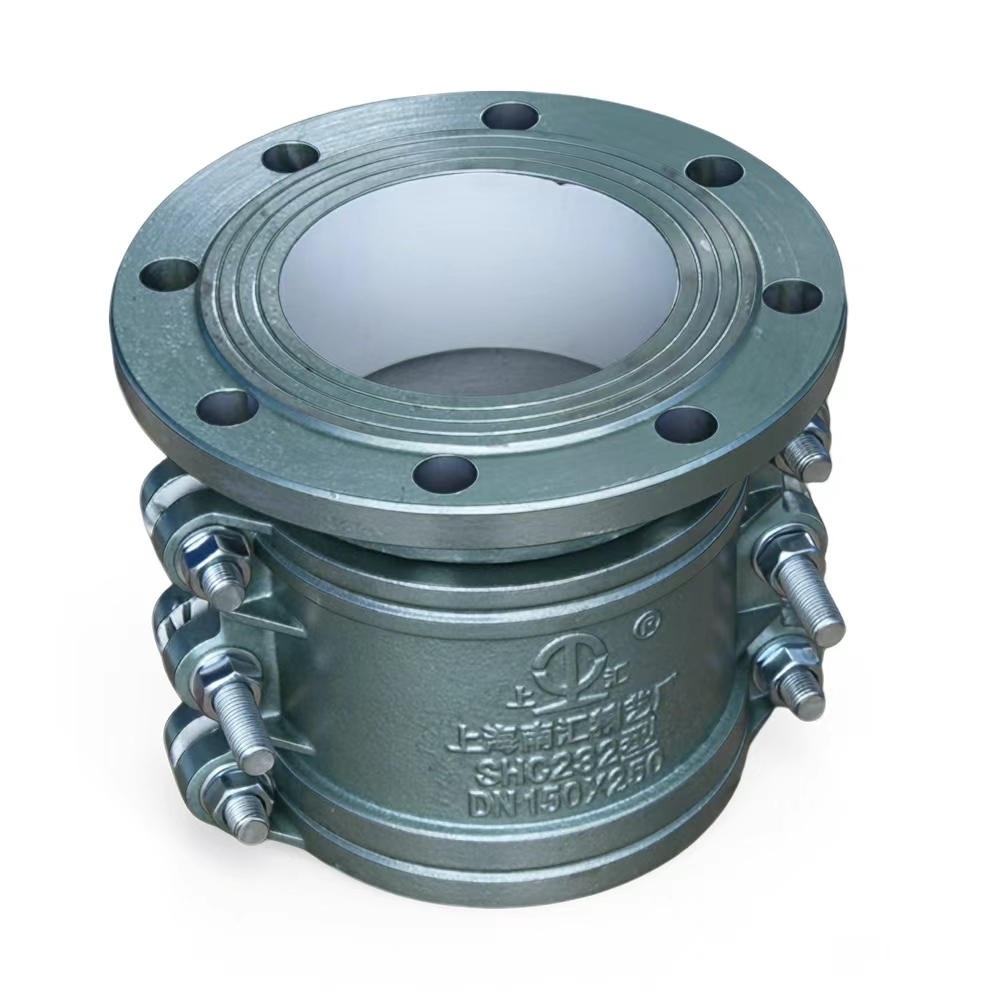
What a sleeve repair clamp is — and when it fits
A sleeve repair clamp is a pipe repair fitting designed to wrap around a damaged or leaking pipe section and create a full-circumference seal. Unlike a standard coupling, the sleeve-type design is built to accommodate protruding foreign objects on the pipe surface — flange discs, flange expansion joints, and other obstructions that would prevent a flush-fitting clamp from seating correctly.
This distinction matters during procurement. If your pipeline has flange obstructions at the repair point, a standard clamp may not seal evenly, and forcing one into place can damage the gasket or leave a leak path. The sleeve repair clamp is the appropriate category when the pipe surface is not smooth and continuous.
Use this guide to move from a general requirement to a supplier-ready specification. It covers the decisions that affect fit and seal, the questions to ask before ordering, and the field checks that catch problems before installation.
Start with the pipe condition, not the product name
The most common procurement error is specifying a clamp by name before confirming what the pipe actually looks like at the repair point. A sleeve repair clamp is designed for protruding obstructions, but the type, size, and location of those obstructions determine whether a given sleeve will work.
Confirm the obstruction type
Flange discs and flange expansion joints are the obstructions named in the product description. Ask the site team to identify exactly what protrudes and how far it extends from the pipe surface. A flange disc that sits close to the pipe wall creates a different sealing challenge than a joint with a wider profile.
Measure the pipe, not the nominal size
Nominal pipe size is a starting point, not a sufficient specification. Record the actual outside diameter at the repair location, including any coating or buildup. If the pipe is corroded or has scale, the measured diameter may differ from the original specification. A clamp sized to nominal dimensions may not compress correctly on a pipe that has lost wall thickness or gained surface buildup.
Check access and working conditions
Confirm whether the repair can be made with the line depressurized or whether the clamp must be installed under live conditions. The sleeve repair clamp description does not state a pressure rating or a live-tap capability, so do not assume either. Ask the supplier directly what installation conditions the product is intended for, and verify against your site procedures.
Selection criteria that affect seal and service life
Once the pipe condition is documented, evaluate the clamp against criteria that determine whether it will seal and stay sealed. The table below summarizes the main decision points and the evidence to request from a supplier.
| Decision point | What to confirm | Evidence to request |
|---|---|---|
| Sleeve profile | Whether the sleeve accommodates the specific obstruction height and shape | Dimensional drawing or profile sketch showing clearance around obstructions |
| Sealing method | How the full-circumference seal is achieved and maintained | Gasket material specification and sealing principle description |
| Material compatibility | Whether the clamp body and gasket suit the pipe material and fluid | Material grades for body, bolts, and gasket; fluid compatibility statement |
| Pressure and temperature scope | The rated operating envelope for the specific size and configuration | Published rating table by size, with test basis if available |
| Installation method | Tools, torque values, and sequence required for correct assembly | Installation instructions and recommended bolt torque |
Treat missing entries in the right-hand column as open questions, not as details to resolve after purchase. A supplier who cannot provide a dimensional drawing or a gasket specification is asking you to accept risk you cannot quantify.
Where the sleeve repair clamp fits in a repair strategy
The sleeve repair clamp is one option among several pipe repair fittings. Choosing between them depends on the obstruction, the pipe material, and whether the line can be shut down.
Sleeve repair clamp vs. standard repair clamp
A standard repair clamp is typically used on smooth pipe where the gasket can sit flush against the pipe wall. When a flange disc or expansion joint protrudes at the repair point, the sleeve design provides the clearance needed to wrap around the obstruction. If your pipe is smooth and unobstructed, a standard clamp may be sufficient and potentially simpler to install. The existing comparison of sleeve repair clamps and standard couplings for flange obstructions covers that decision in more detail.
Reducer repair clamp and valve expansion joint as adjacent options
A reducer repair clamp addresses diameter transitions, where the pipe changes size. A valve expansion joint is used at the connection between a pipe and a valve, with a flange on one side and a clamp on the other, providing anti-vibration protection and compensating for thermal expansion at valve junctions. These are different fittings for different problems. Do not substitute one for another based on availability alone; confirm the application with the supplier and your engineering team.
Supplier questions that separate ready suppliers from order-takers
The supplier's ability to answer technical questions is a useful proxy for how they will handle a problem after the order. Ask these questions in writing and keep the responses.
- Can you provide a dimensional drawing for the size I need? The drawing should show the sleeve profile, overall length, and clearance around obstructions.
- What gasket material is supplied as standard, and what alternatives are available? Match the gasket to the fluid and temperature, not to the lowest price.
- What is the rated pressure and temperature range for this specific size and configuration? Ratings can vary by size; a generic catalogue figure may not apply to your order.
- What installation torque and sequence do you recommend? Uneven tightening is a common cause of seal failure on full-circumference clamps.
- Can you supply a sample or a single unit for field trial before a larger order? A trial on the actual pipe condition is the most reliable validation available.
- What is the expected lead time for this size, and what documentation accompanies the shipment? Confirm what is included: drawing, material certificate, installation instructions.
If a supplier answers these questions consistently and in writing, that is a positive signal. If answers are vague or change between contacts, treat that as a warning sign regardless of price.
Field validation before you commit to a volume order
No catalogue description substitutes for a trial on the actual pipe. Before a volume order, install one clamp at the intended repair location and observe the result.
What to check during the trial
- Fit around the obstruction: Does the sleeve seat without forcing, and does the gasket contact the pipe around the full circumference?
- Seal under operating conditions: Bring the line up to normal pressure and temperature and inspect for weeping at the sleeve edges.
- Installation time and tools: Record how long the installation takes and whether any special tools are needed. This informs both labor cost and future maintenance planning.
- Bolt torque retention: Re-check torque after the line has been at operating temperature for a period. Thermal cycling can loosen bolts on any clamped fitting.
Document the trial with photos and notes. If the clamp does not seal, the record helps the supplier diagnose whether the issue is sizing, gasket selection, or installation method.
Warning signs in a sleeve repair clamp quotation
Some quotations look complete but leave the buyer carrying the risk. Watch for these patterns.
- No dimensional drawing. Without a drawing, you cannot verify clearance around your obstruction before delivery.
- Unspecified gasket material. "Rubber gasket" is not a specification. Ask for the material grade and its fluid compatibility.
- Pressure rating stated without size context. A rating that is not tied to a specific size and configuration is not verifiable.
- No installation instructions. A full-circumference seal depends on correct bolt sequence and torque; missing instructions shift that risk to your crew.
- Reluctance to supply a sample. A supplier confident in the fit should be willing to support a trial, subject to commercial terms you agree.
None of these signs is automatically disqualifying, but each one should be resolved in writing before you place a volume order.
Next steps for procurement
Consolidate what you have learned into a short specification: pipe outside diameter at the repair point, obstruction type and height, fluid and temperature, line pressure, pipe material, and whether the line can be shut down. Send that specification to two or three suppliers and ask for a drawing, gasket specification, rating for the specific size, and installation instructions. Compare responses on completeness and clarity, not only on unit price. Then run a single-unit trial before committing to volume.
For buyers evaluating the broader range, the reducer repair clamp and valve expansion joint pages on shnhjy.cn describe adjacent fittings for diameter transitions and valve connections. Use them to confirm whether your application is a sleeve repair clamp case or belongs to one of those categories.