
July 14, 2026
Cross-Material Pipe Repair: How Ductile Iron Clamps Seamlessly Adapt to PVC, HDPE, Steel, and Cast Iron Pipelines
Introduction
Pipe repair in the field is rarely a controlled exercise. When a leak occurs, the damaged pipeline could be PVC, HDPE, steel, cast iron, ductile iron, asbestos cement, copper, or fiberglass. Carrying a full inventory of material-specific repair fittings for every possible pipe type is impractical—and often impossible in emergency response situations.
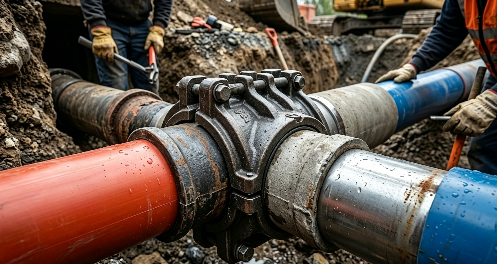
This is where ductile iron repair clamps demonstrate their value. These clamps are designed to provide a full circumferential seal on pipes regardless of the base material. They are suitable for repairing leaks in PVC, HDPE, steel, cast iron, ductile iron, asbestos cement, copper, aluminum, and fiberglass pipelines.
The ability to seal across such a broad spectrum of pipe materials is not accidental. It is the result of deliberate engineering choices in clamp design, sealing technology, and material selection. This article examines how ductile iron repair clamps achieve this cross-material adaptability, the technical challenges they overcome, and what procurement professionals should look for when specifying these clamps for mixed-material pipeline networks.
The Engineering Challenge: Why Pipe Materials Are So Different
Pipe materials vary dramatically in their physical properties, each presenting unique challenges for repair fittings:
Cast and ductile iron — Rigid, heavy, with relatively consistent outside diameters but subject to corrosion and graphitization over time. Surface irregularities from corrosion can make sealing difficult.
Steel — Strong and dimensionally stable, but prone to corrosion and pitting. Steel pipe outside diameters follow standardized schedules (e.g., Schedule 40, Schedule 80) with relatively tight tolerances.
PVC — Lightweight and corrosion-resistant, but softer than metal pipes. PVC has lower surface hardness and can be easily scored or damaged. Outside diameters follow IPS (Iron Pipe Size) standards but with different wall thicknesses.HDPE — Flexible and tough, with significant variation in outside diameter depending on the SDR (Standard Dimension Ratio) rating. HDPE is the most challenging material for traditional repair clamps because of its tendency to deform under clamping pressure, its relatively low surface hardness, and the wide OD tolerances between different SDR ratings. HDPE DR17 or thicker materials often require special considerations such as spring washers to maintain proper clamping force.
Asbestos cement — Brittle and prone to cracking, requiring careful clamping to avoid further damage.
A repair clamp that works on one material may fail on another if it cannot accommodate differences in surface hardness, OD tolerance, thermal expansion, or compressibility.
The Sealing Solution: How Ductile Iron Clamps Achieve Cross-Material Compatibility
The Full Circumferential Seal
The foundation of cross-material compatibility is the full circumferential seal. Premium ductile iron repair clamps feature a full encirclement, tapered, overlapping, gridded gasket. This design ensures that the sealing element completely surrounds the pipe, regardless of its material. The gasket is flush mounted and bonded, with a stainless steel bridge plate spanning the band opening between the lugs. This provides uniform compression around the entire pipe circumference.
The Gridded Gasket Design
The gridded gasket is the key enabling technology. Unlike flat gaskets that rely on uniform compression across a smooth surface, the gridded design:
Provides multiple sealing points that adapt to surface irregularities
Compensates for minor variations in pipe OD and roundness
Accommodates surface imperfections such as corrosion pits, scratches, or manufacturing tolerances
Maintains sealing integrity even when the pipe surface is not perfectly smooth
The grid pattern allows the gasket to conform to the pipe surface while maintaining consistent sealing pressure. This is particularly important for cast iron pipes with corrosion damage, steel pipes with pitting, and plastic pipes with surface scratches or irregularities.
Wide OD Range Capability
Cross-material compatibility also requires wide OD range capability. Different pipe materials—even with the same nominal size—can have different outside diameters. A 4-inch PVC pipe has a different OD than a 4-inch steel pipe, which differs from a 4-inch cast iron pipe.
Premium repair clamps are designed to accommodate a wide range of outside diameters. This range allows a single clamp size to fit multiple pipe materials with different ODs. Larger clamps typically have a greater range to help reduce inventory requirements.
Some advanced clamps, like the RepLINK series from Pamline, can accommodate pipes with very high tolerance and allow up to ±3° of angular deflection, making them suitable for pipes that are slightly out of alignment.
Material Compatibility: Corrosion Resistance
The clamp body material must be compatible with all potential pipe materials. Most ductile iron repair clamps use 304 stainless steel construction for the band sections and hardware. Stainless steel provides:
Corrosion resistance in aggressive soil conditions
Durability for permanent installations
Compatibility with all pipe materials without galvanic corrosion concerns
The use of stainless steel bands and hardware ensures that the clamp itself does not become a source of corrosion, regardless of the pipe material it is installed on.
Adjustable Clamping Mechanism
The clamping mechanism must provide uniform force distribution across the gasket. Ductile iron clamps use bolt-and-nut systems that allow precise tightening. The adjustable design eliminates the need for multiple clamp sizes, offering greater flexibility than fixed-grip alternatives. This adjustability is critical when working with different pipe materials that have different surface hardness and compressibility characteristics.
Material-Specific Adaptation Strategies
PVC Pipes
PVC pipes present a relatively straightforward sealing challenge. They have smooth surfaces, consistent ODs (following IPS standards), and moderate surface hardness. The gridded gasket conforms easily to PVC surfaces, and the clamp's OD range accommodates standard PVC dimensions.
For PVC pipe repairs, the clamp must be tightened to provide adequate sealing pressure without over-compressing the softer plastic material. The adjustable bolt system allows for precise pressure control.
HDPE Pipes
HDPE is the most challenging material for repair clamps. Its flexibility, low surface hardness, and wide OD tolerances require special attention. For HDPE pipes, particularly those with DR17 or thicker walls, spring washers are often required to maintain proper clamping force.
The spring washers compensate for the tendency of HDPE to deform under clamping pressure. As the pipe material relaxes over time, the spring washers maintain consistent clamping force, preventing leaks. Without spring washers, the clamp may loosen as the HDPE compresses, leading to seal failure.
The gridded gasket design is particularly effective on HDPE because it distributes sealing pressure over a wider area, reducing the risk of surface damage while maintaining a reliable seal.
Steel Pipes
Steel pipes have relatively consistent ODs and high surface hardness. The primary challenge is dealing with corrosion, pitting, and surface irregularities. The gridded gasket conforms to irregular surfaces, and the stainless steel construction of the clamp prevents galvanic corrosion between dissimilar metals.
For steel pipe repairs, the clamp provides a full 360° seal that can bridge pitted or corroded areas without requiring extensive surface preparation.
Cast and Ductile Iron Pipes
Cast and ductile iron pipes have rigid, heavy walls with relatively consistent ODs but are subject to graphitization and corrosion over time. The gridded gasket conforms to the irregular surfaces that result from corrosion, while the clamp's robust construction provides the high clamping force required for these rigid materials.
The ductile iron clamp body matches the material properties of the pipe, ensuring consistent thermal expansion and corrosion resistance.
Asbestos Cement Pipes
Asbestos cement pipes are brittle and prone to cracking. The clamp must provide sealing pressure without over-stressing the pipe material. The gridded gasket distributes sealing pressure evenly, reducing the risk of further damage.
Installation Considerations for Cross-Material Repairs
Surface Preparation
Proper surface preparation is essential regardless of the pipe material. The pipe surface must be thoroughly cleaned to remove scale, dirt, or debris that could affect the gasket seal. For corroded metal pipes, loose corrosion products should be removed to ensure the gasket contacts sound material.
Clamp Positioning
The clamp must be centered over the break or damaged area, with the gasket flap at the top. Proper positioning ensures that the gasket spans the entire damaged area and provides a complete seal.
Torque Control
Proper bolt torque is critical for all pipe materials. Under-tightening results in leaks; over-tightening can damage plastic pipes or distort the gasket. For HDPE pipes, the use of spring washers helps maintain proper torque over time.
Angular Deflection
Some advanced repair clamps can accommodate angular deflection of up to ±3°, making them suitable for pipes that are slightly out of alignment. This is particularly valuable in field repairs where the pipe may have shifted or settled.
Real-World Products and Applications
Several manufacturers produce ductile iron repair clamps that demonstrate cross-material compatibility:
Smith-Blair Full Circle® Repair Clamps are available in single-band (Model 261) and double-band (Model 262) configurations. They are constructed from 304 stainless steel and feature a full circumferential gasket seal. They work on cast iron, ductile iron, steel, asbestos cement, copper, aluminum, PVC, HDPE, and fiberglass.
Smith-Blair 227 Full Circle® Repair Clamp is a double-band clamp designed for repairing full circumferential breaks, holes, and cracks. It works on cast and ductile iron, steel, asbestos cement, copper, aluminum, PVC, HDPE, and fiberglass.
RepLINK Ductile Iron Repair Clamps from Pamline are designed for steel, ductile iron, PVC/PE, and fiber-cement pipes with very high tolerance. They feature EPDM gaskets and ductile iron bodies with nylon coating for corrosion resistance.
JCM Universal Clamp Couplings provide a full circumferential seal and wide range for permanent repair or reconnection of asbestos-cement, cast iron, ductile iron, PVC, HDPE, and other pipe types.
Mueller 510 and 511 Series Xtra-Range Full-Seal Clamps are designed for 4" through 24" cast iron, ductile iron, steel, A-C, and PVC pipe.
Some clamps are engineered to withstand pressures up to 16 bar, making them suitable for industrial-grade water systems. They are backed by certifications such as CE and KITEMARK, ensuring compliance with rigorous safety and environmental standards.
FAQ
Q: What materials can ductile iron repair clamps seal?
A: Premium ductile iron repair clamps work on cast iron, ductile iron, steel, asbestos cement, copper, aluminum, PVC, HDPE, and fiberglass pipes. Some products also support other pipe types.
Q: Why are HDPE pipes more difficult to repair with clamps?
A: HDPE pipes have flexible walls, low surface hardness, and wide OD tolerances depending on the SDR rating. They tend to deform under clamping pressure, which can cause the clamp to loosen over time. Spring washers are often required to maintain proper clamping force on HDPE DR17 or thicker pipes.
Q: Do I need different clamps for different pipe materials?
A: No. Premium ductile iron repair clamps are designed for cross-material compatibility. A single clamp can seal PVC, HDPE, steel, cast iron, and other pipe types, provided the OD falls within the clamp's range.
Q: How does the gridded gasket improve sealing on different materials?
A: The gridded gasket provides multiple sealing points that adapt to surface irregularities. It compensates for variations in pipe OD, roundness, and surface condition, maintaining sealing integrity even on corroded or damaged pipe surfaces.
Q: What pressure rating do ductile iron repair clamps typically have?
A: Standard models are typically rated for working pressures up to 175 PSI, with some advanced models engineered to withstand pressures up to 16 bar (approximately 232 PSI). Premium models can handle significantly higher pressures.
Q: Do I need to weld or permanently modify the pipe to install a repair clamp?
A: No. Ductile iron repair clamps are designed for rapid installation without welding or permanent modification. They clamp around the existing pipe, making them suitable for emergency repairs and live-line installations.
Q: Are these clamps suitable for potable water applications?
A: Yes. Many ductile iron repair clamps are certified for drinking water applications, with EPDM gaskets that meet drinking water standards. Always verify the specific product's certifications for your application.
Final Thoughts
Ductile iron repair clamps solve a fundamental problem in pipeline maintenance: how to seal leaks on pipes of different materials without carrying a separate repair fitting for every pipe type. Through a combination of full circumferential sealing, gridded gasket design, wide OD range capability, stainless steel construction, and adjustable clamping mechanisms, these clamps provide reliable repairs across PVC, HDPE, steel, cast iron, and many other pipe materials.
The engineering is proven. Smith-Blair, JCM, Mueller, and Pamline all manufacture clamps that work across multiple pipe materials. The sealing technology—full encirclement, tapered, overlapping gridded gaskets—is the same regardless of the pipe material. And the installation process is consistent: clean the pipe, position the clamp, and tighten the bolts.
For procurement professionals and maintenance teams managing mixed-material pipeline networks, the ductile iron repair clamp is not just a convenience—it is a practical necessity that reduces inventory requirements, simplifies emergency response, and ensures reliable repairs regardless of what material the damaged pipe happens to be.